Took my father to Palma a few months ago. Saturday March 7th, 2026, I got the call.
~2 weeks ago I was sprinting through an airport trying to get on a flight back to Houston because my dad might be paralyzed. That's a sentence you don't really rehearse for. I didn't fall apart—didn't do the dramatic movie-scene breakdown—I just got quiet.
Started praying, started asking other people to pray, which is not exactly my default setting. But when the floor drops out in a manufacturing facility, you basically reach for whatever's bolted down, sometimes it's prayers.
The Response
Here's what I'll remember most: about 30 different executives and friends with big teams—people who run things, people who are busy in ways that make "busy" feel like an understatement—all called or texted. Every single one.
I was on a flight within six and a half hours of getting the call. One of my closest college buddies and his wife jumped in their car at a moment's notice to grab my suitcase from the hotel in Atlanta so I wouldn't have to stand at a baggage carousel in Houston like some schmuck while my father was in the hospital on the way to surgery.
That one act—small to describe, enormous to live—got me straight from the tarmac to the ICU to see my father 5 minutes before he ended up in surgery. Meet Leonidas, the dog.
The NKS
The whole time I was in transit, racing south from Atlanta to Houston, I kept telling myself one thing: I'm not in North Korea. My dad has access to smart, capable people who are going to figure this out.
I call this the North Korea Strategy. Sounds absurd—it is absurd—but the NKS works precisely because it reminds you however helpless you think you are, you're not actually helpless.
You're not in a place where the infrastructure has collapsed or never existed. You are somewhere with resources, with specialists, with people whose entire life's work is solving exactly this problem. That's not trivial, that's pretty much everything.
My bank sent me a notice. Good crew over there at Flex.
The Recovery
My dad—with prayers, with some genuinely incredible neurosurgeons and doctors—recovered his ability to move his legs, his arms, his hands. He can walk. He can talk. He's got heavy weeks of physical rehab ahead of him, and I'll be there for that. But he's here, and he's moving, and two weeks ago that outcome was not guaranteed.
The Case for the Big City
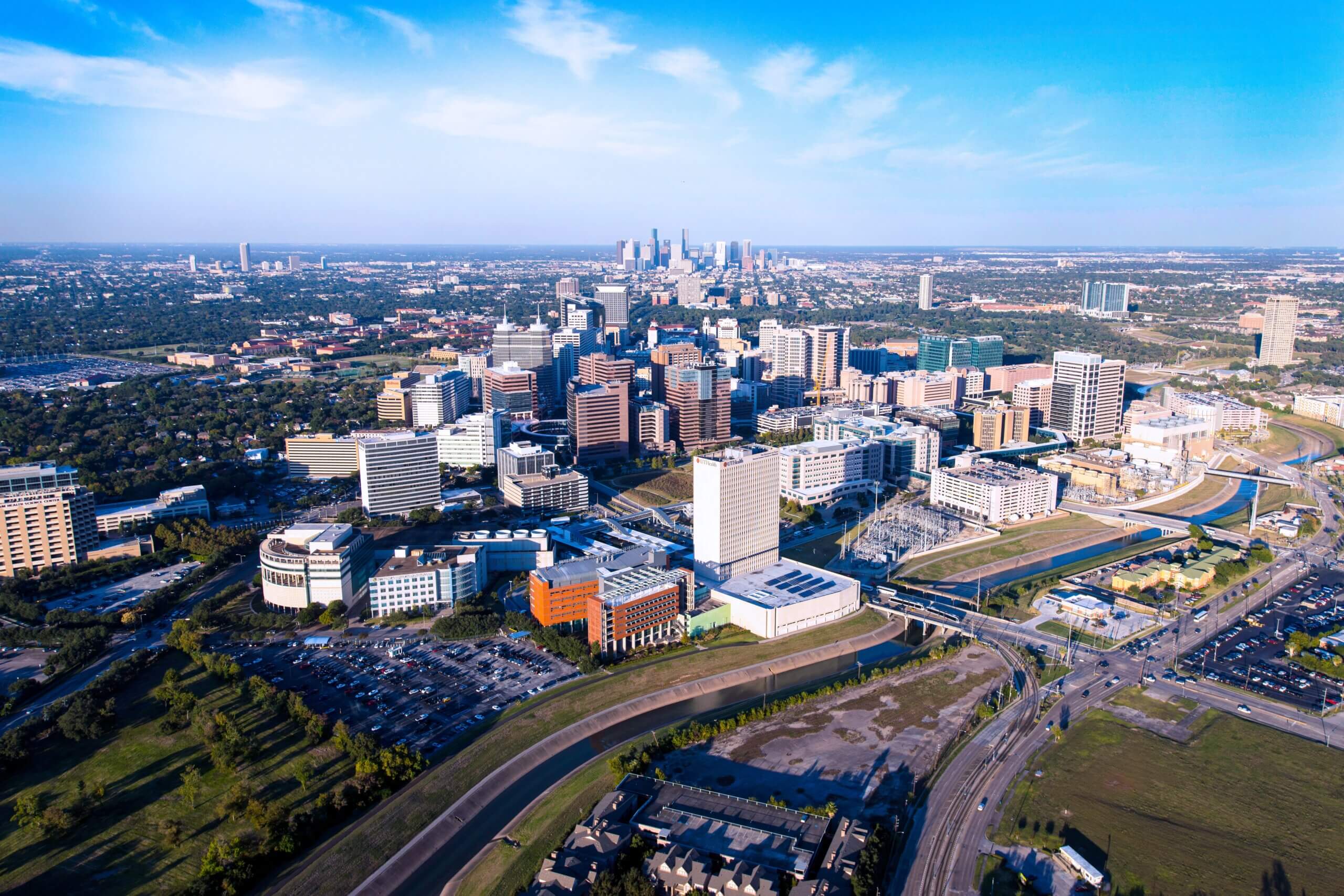
The TMC is 1400ish acres and features 21 hospitals, 13 support organizations, 9 academic/research institutions, and over 100,000 employees. Services 10M patients a year and has 180k hospital beds.
The Texas Medical Center is a quiet monster—one of the largest medical complexes on the planet, and it has every nuanced subspecialty you can think of.
Neurosurgeons who specialize exclusively in the spine. Rehab staff who've seen your exact scenario a hundred times before.
This is the long-tail argument for living in a major city that nobody talks about at dinner parties: when something rare and terrifying happens to someone you love, you want to be in a place where "rare" is mundane for the team down the hall.